
A lower rate is only the start

Updated: Jul 22
The Australian mortgage market has been busy lately.
Even while the RBA cash rate remains high, some lenders have started cutting selected home loan rates to compete for new borrowers and refinance customers.
That sounds tempting.
But if you already have a mortgage, the real question is not “who has the lowest rate?”
It is: will switching actually make your monthly cash flow feel better?
1. Check your current rate first
Open your loan account and look at your actual rate, repayment and remaining loan balance. Do not rely on what you remember from when the loan started.
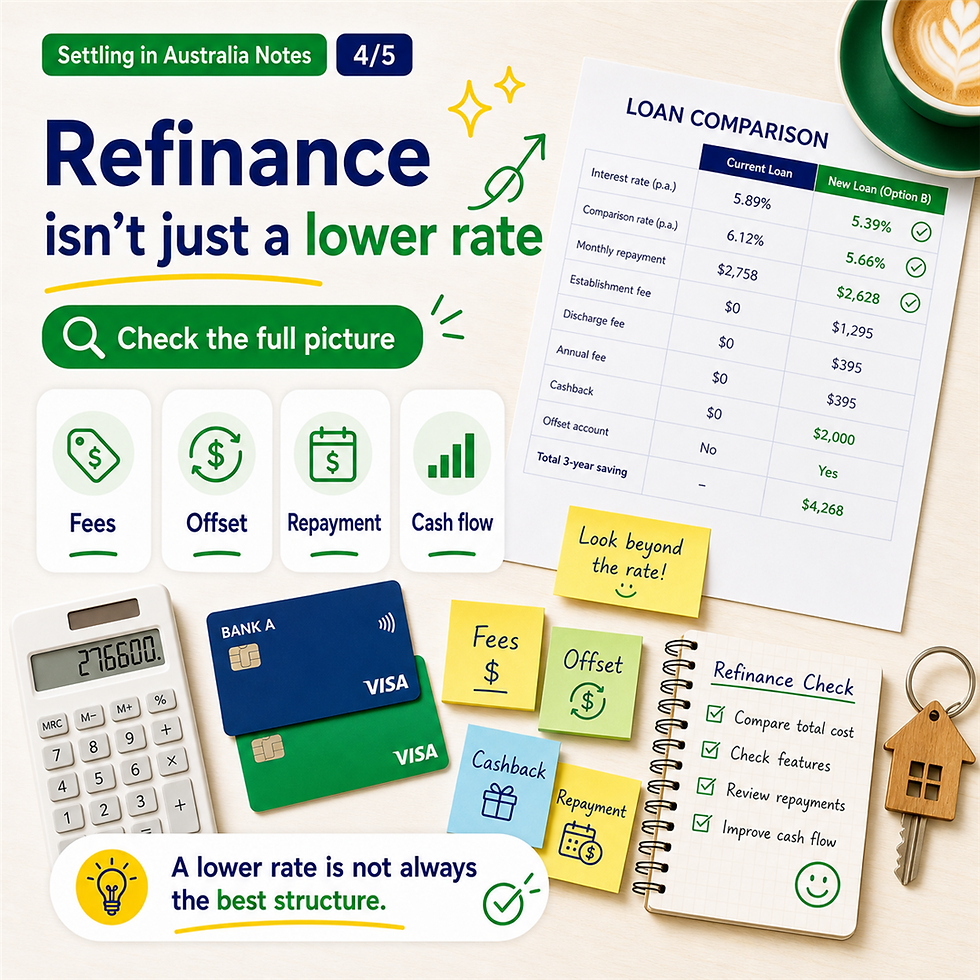
2. Do not compare headline rates only
A low advertised rate may still come with annual fees, package fees, application costs, valuation fees or fewer useful features.
3. Review offset and redraw
If you keep savings aside, an offset account may help reduce interest. If you need flexibility, redraw, split loans or repayment options may matter too.
4. Calculate the new monthly cash flow
Refinancing is not about chasing the smallest number. It should help your repayment, household budget and buffer work together more comfortably.
A low rate can open the door.
But the right loan structure is what helps you live with the mortgage every month.
If you have not reviewed your home loan for more than 12 months, start with a simple check: rate, repayment, offset, fixed-rate expiry and whether refinance options are worth exploring.
What would you check first: rate, repayment or loan structure?
Refinance = moving your existing loan to a new lender or product to improve rate, cash flow or structure.
Headline Rate = the advertised rate, which may not show all fees and conditions.
Offset Account = an account that can reduce the loan balance used to calculate interest.
*General information only. This is not financial advice. Loan options and eligibility depend on your personal income, liabilities, assets and lender assessment criteria.


Comments