
November rate rise: how much more will my home loan cost each month?


Your extra monthly home-loan cost is the new repayment amount minus the old repayment amount in your lender’s notice. The RBA raised its cash rate target by 0.25 percentage points to 4.85% on 3 November 2026. That policy rate is different from the interest rate on your individual home loan. Your loan type, lender’s decision, balance and remaining term determine the effect on your repayments.
What changed in the November decision?
The RBA’s decision increased the cash rate target from 4.60% to 4.85%. This is an increase of 0.25 percentage points. It does not mean that every borrower’s monthly repayment rises by 0.25%, or that every home loan now charges 4.85%. ABC’s The Business report on 3 November discussed how the effects of recent increases take time to flow through. This article is the 4 November issue, checked for publication on 5 November.
What should I find in my bank’s notice?
Look for the new interest rate, the date it starts, the new required repayment and the date that repayment changes. The interest-rate change date and repayment-change date may differ. Check whether a direct debit will adjust automatically or whether you must change an external transfer. If anything is unclear, ask the lender to confirm the amount and first due date in writing.
A simple monthly-budget example
Suppose your bank says the required monthly payment will rise from $3,200 to $3,300. The additional amount to allow for is $100 each month: $3,300 minus $3,200. These are hypothetical numbers chosen to explain the method, not current market repayments or a quote for your loan. Put that $100 alongside groceries, utilities, insurance and other committed payments to see whether your budget still balances.
Does a fixed-rate loan change straight away?
A fixed rate generally continues for the agreed fixed period, subject to the contract. A split loan can have a variable portion that changes while its fixed portion stays fixed. If a fixed period is about to end, ask which rate and repayment will apply afterwards. Use the lender’s actual notice rather than treating the headline cash rate as your new home-loan rate.
Should I compare another loan?
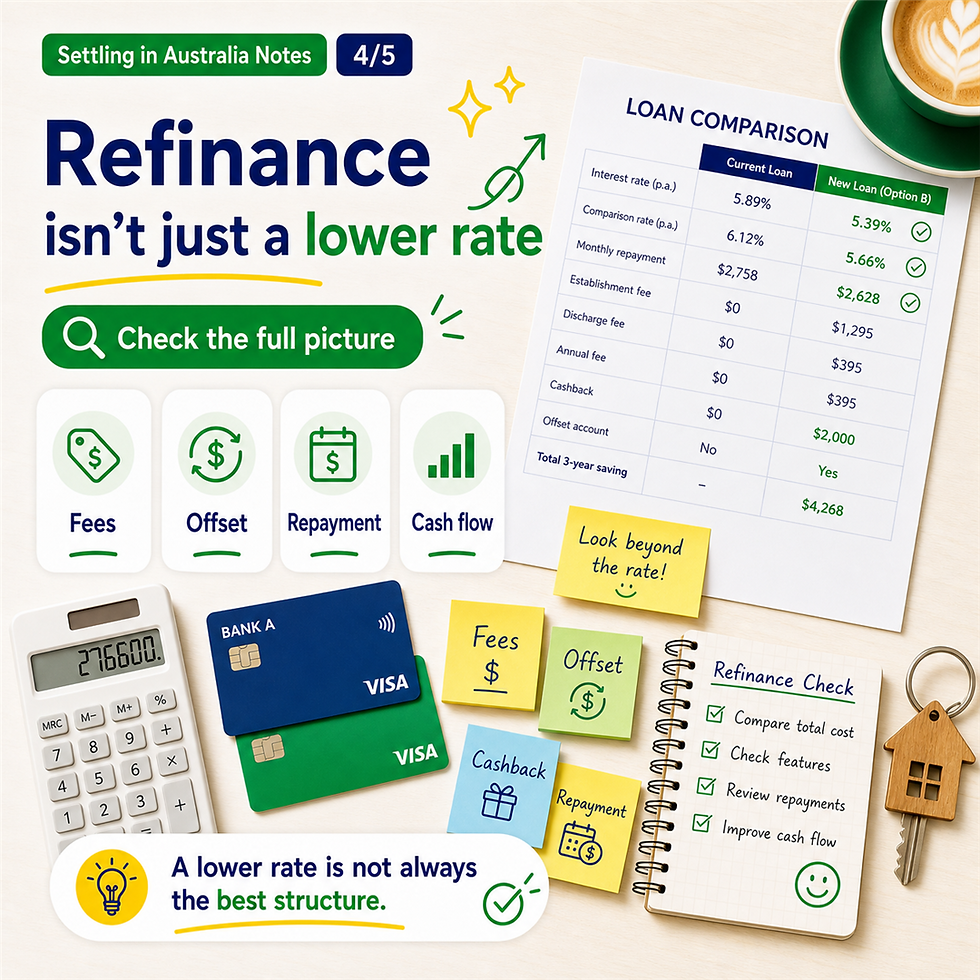
You can first ask your existing lender what options it can offer. If comparing a new lender, include fees, switching costs, the remaining loan term and features you will actually use. A lower monthly payment can result from extending the loan term, which may increase total interest. Approval for a new loan depends on the lender’s assessment.
What if the higher repayment will be difficult?
Contact your lender before a payment is missed and explain the expected shortfall. Ask about its hardship process and what information it needs. A broker can help you understand a loan comparison, while your lender decides hardship arrangements.
Sources checked 5 November 2026. General information only, not personal financial advice. Loan options depend on individual circumstances, loan terms and lender assessment.


Comments